
Property managers and HOAs
Plan shared lots, roads, walks, entrances, and reports across one or more properties.
Commercial snow and ice service
Keep your lot, walks, loading areas, and entrances open. We set the trigger, work plan, salt terms, and timing before the storm. After each completed visit, the service record stays tied to the location, time, photos, and checklist.
03 / Service plan
One written plan can cover the lot, walks, salt, snow piles, and long storms.
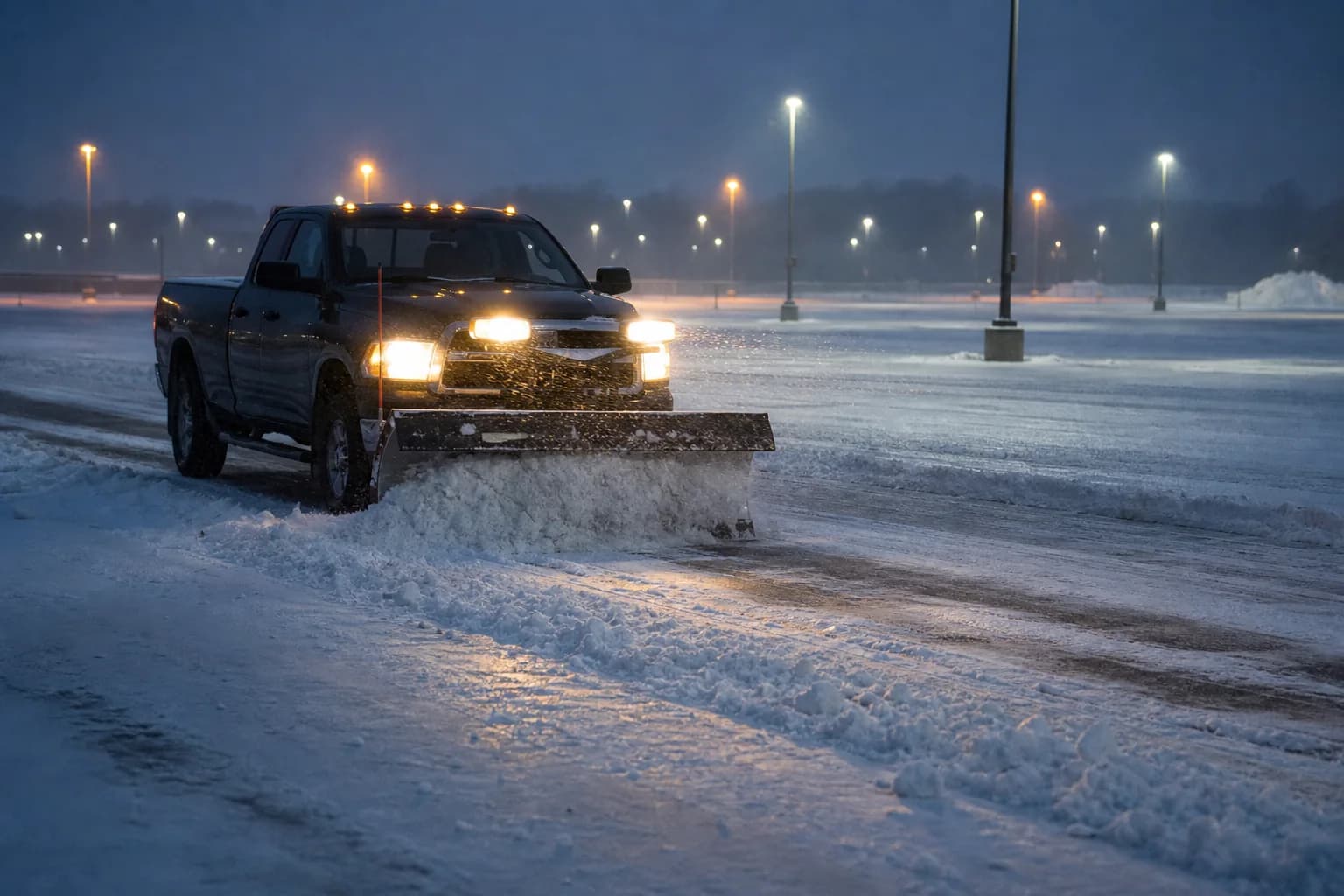
We clear drive lanes, parking areas, fire lanes, loading zones, and other named pavement at the trigger in your plan.
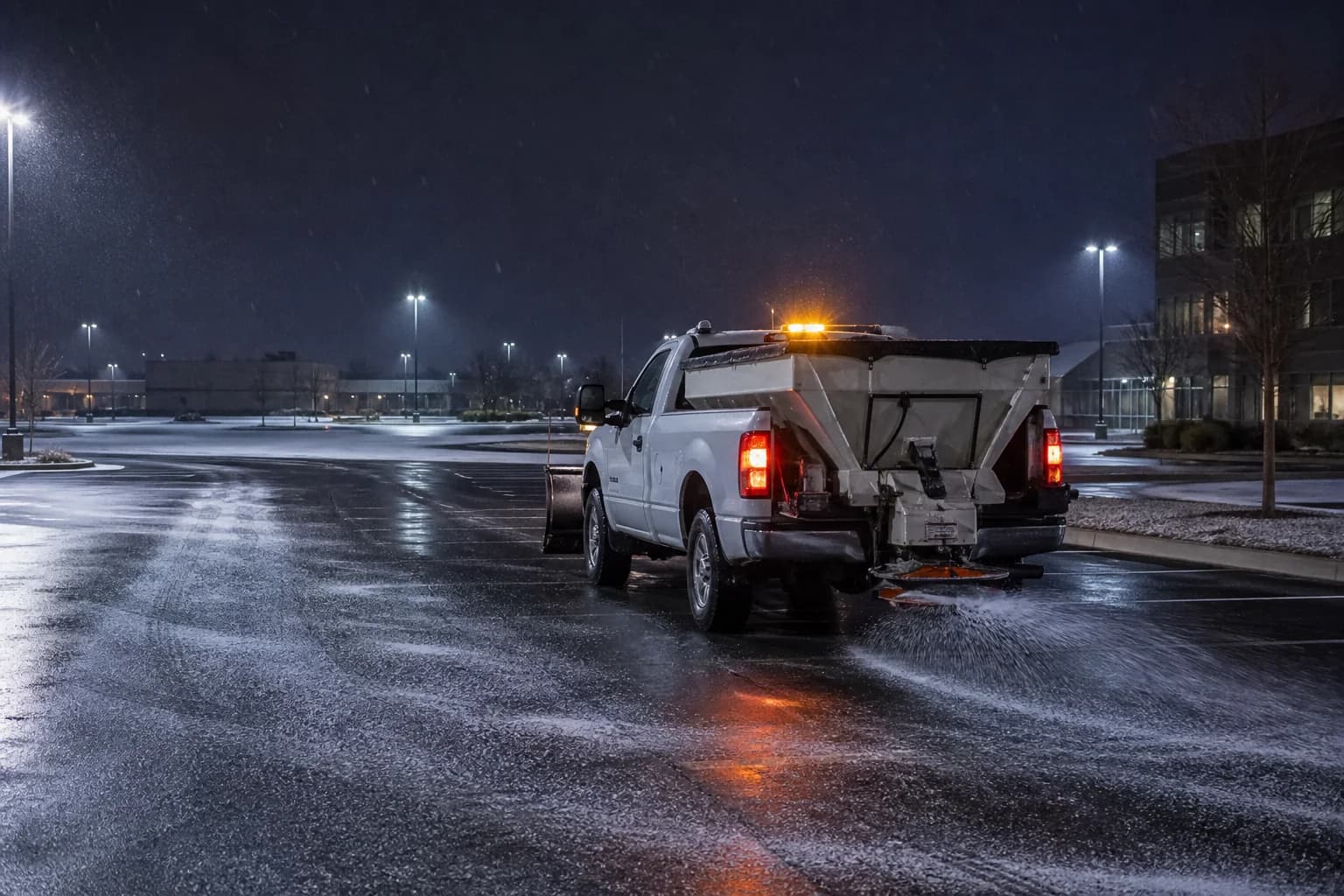
Your plan lists the treatment area, product, ice-only work, and refreeze coverage so salt is not a vague add-on.
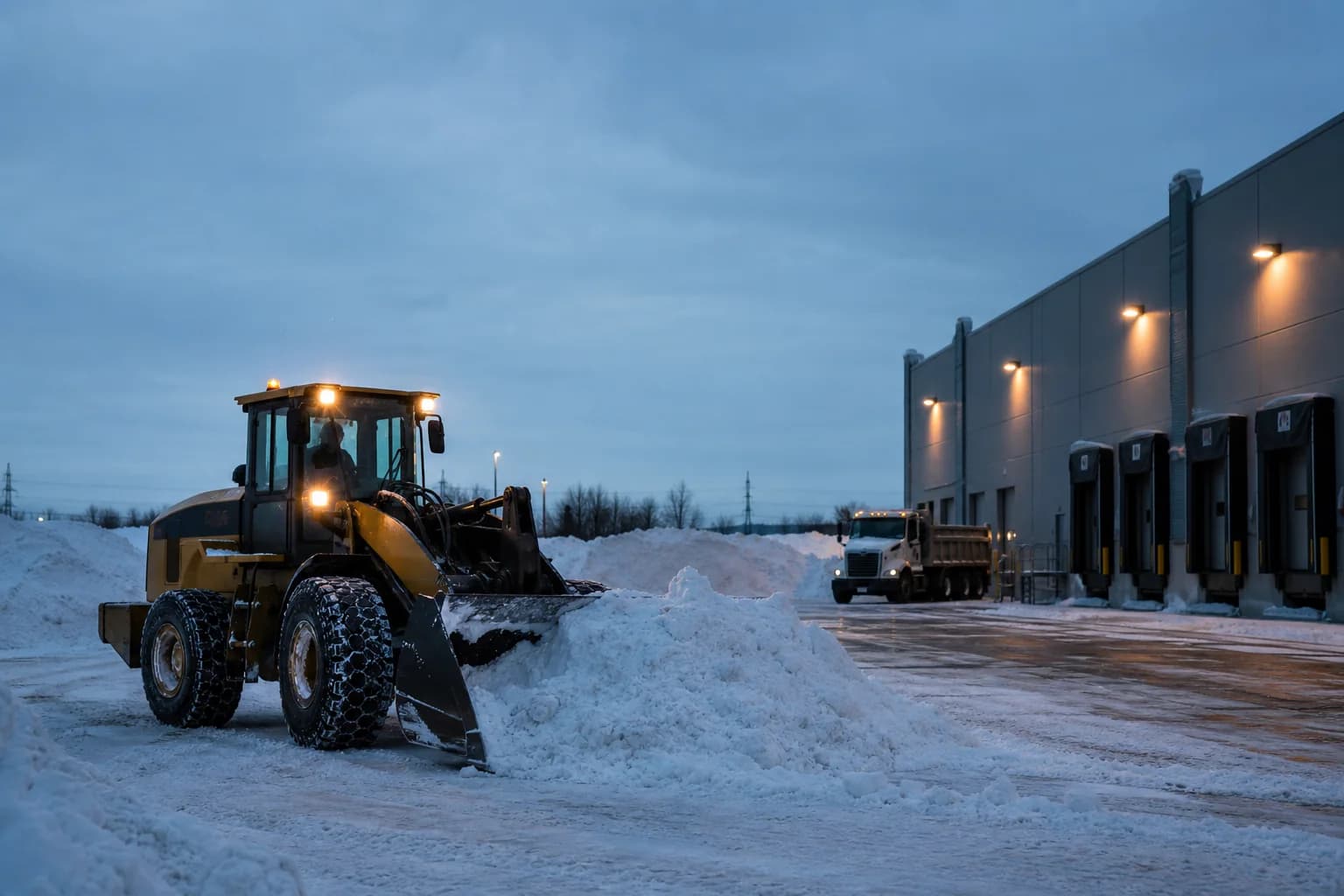
When piles block spaces, sight lines, drains, or loading areas, loaders and trucks can move or haul the snow under a written estimate.
Separate walk crews can clear entrances, steps, ramps, ADA paths, and named walks with tools and products made for those surfaces.
04 / Price and scope
A clear contract removes the questions that cause most storm-day problems.
| Plan item | What should be clear |
|---|---|
| Service trigger | The snow, ice, or refreeze condition that starts work |
| Work areas | Lots, lanes, walks, loading zones, entrances, and treatment areas |
| Timing | Opening time, priority areas, and the target for the final pass |
| Long storms | When open-up passes happen and what counts as another visit |
| Salt | Product, treatment area, ice-only work, and refreeze checks |
| Snow placement | Where piles can go and when hauling may be needed |
| Proof | What record you receive after the completed visit |
| Price | What starts a charge and what is billed separately |
The signed property plan controls service. Ask any bidder to put each item in writing before winter.
05 / What happens next
We measure pavement and walks, check access, mark snow space, and learn when the site must open.
The proposal lists the trigger, work areas, timing, salt, equipment, proof, and price.
The property is placed on a planned route with the crew, equipment, and backup support needed for the scope.
We track the National Weather Service forecast, radar, temperature, and refreeze risk before and during the event.
The team completes the named work. The visit record stays tied to the site, time, photos, and checklist.
06 / Field guide
A lot can look clear in the afternoon and freeze again after dark. That is why a useful plan covers snow, ice-only events, and refreeze instead of waiting for deep snow.
The best plan also matches how the property works. A medical office, warehouse, retail lot, and apartment site do not have the same opening time, traffic, or risk areas.
07 / Service plan
Keep entrances, fire lanes, drive lanes, and busy parking areas open around customer hours and deliveries.
Set priority walks, ADA paths, entrances, and a lower service trigger when the site needs a tighter standard.
Plan truck courts, dock areas, employee lots, gate access, shift changes, and long-storm open-up passes.
Use one clear reporting and service standard across shared roads, lots, walks, and more than one address.
08 / Next step
Send the address and opening needs. We will review the site and build a clear scope and price before winter service starts.
Property type / Service plans
The right crew, trigger, and timing depend on how people use the site.
Plan shared lots, roads, walks, entrances, and reports across one or more properties.
Keep truck courts, docks, gates, employee lots, and shift-change routes open during long storms.
Set priority entrances, ADA paths, walks, and tighter snow or ice triggers around opening hours.
Use one simple list to compare the work plan, proof, backup capacity, risk terms, and price.
FAQ / Straight answers
The price depends on lot shape, walks, trigger, salt, opening time, snow space, route priority, and equipment. Our public starting labor rules are shown in the pricing guide, but an exact property price needs a measured scope.
Many properties use a 1-inch or 2-inch trigger. Medical, high-traffic, and high-risk sites may choose a tighter plan that also covers ice-only and refreeze work. The right trigger depends on how the site opens and who uses it.
Yes, when ice-only service is listed in the agreement. The plan should name the treatment area, product, trigger, and whether refreeze checks are included.
A completed visit stays tied to the property location, service time, photos, and site checklist. That gives the property team a usable record after the storm.
We serve commercial properties across the St. Louis metro and selected Metro East routes. Send the address so we can check the site, route, and service needs.
Sometimes. We first check the site, scope, route, crew, equipment, and remaining capacity. We will not promise a mid-season start until the property can be added without hurting active routes.
Fast property review
Send the address. We will review the site, define the work, and build a clear plan before the next storm.
Call any time during a storm · (314) 501-SNOW